
01
An urban gateway
A gateway tied directly to a restless megacity.
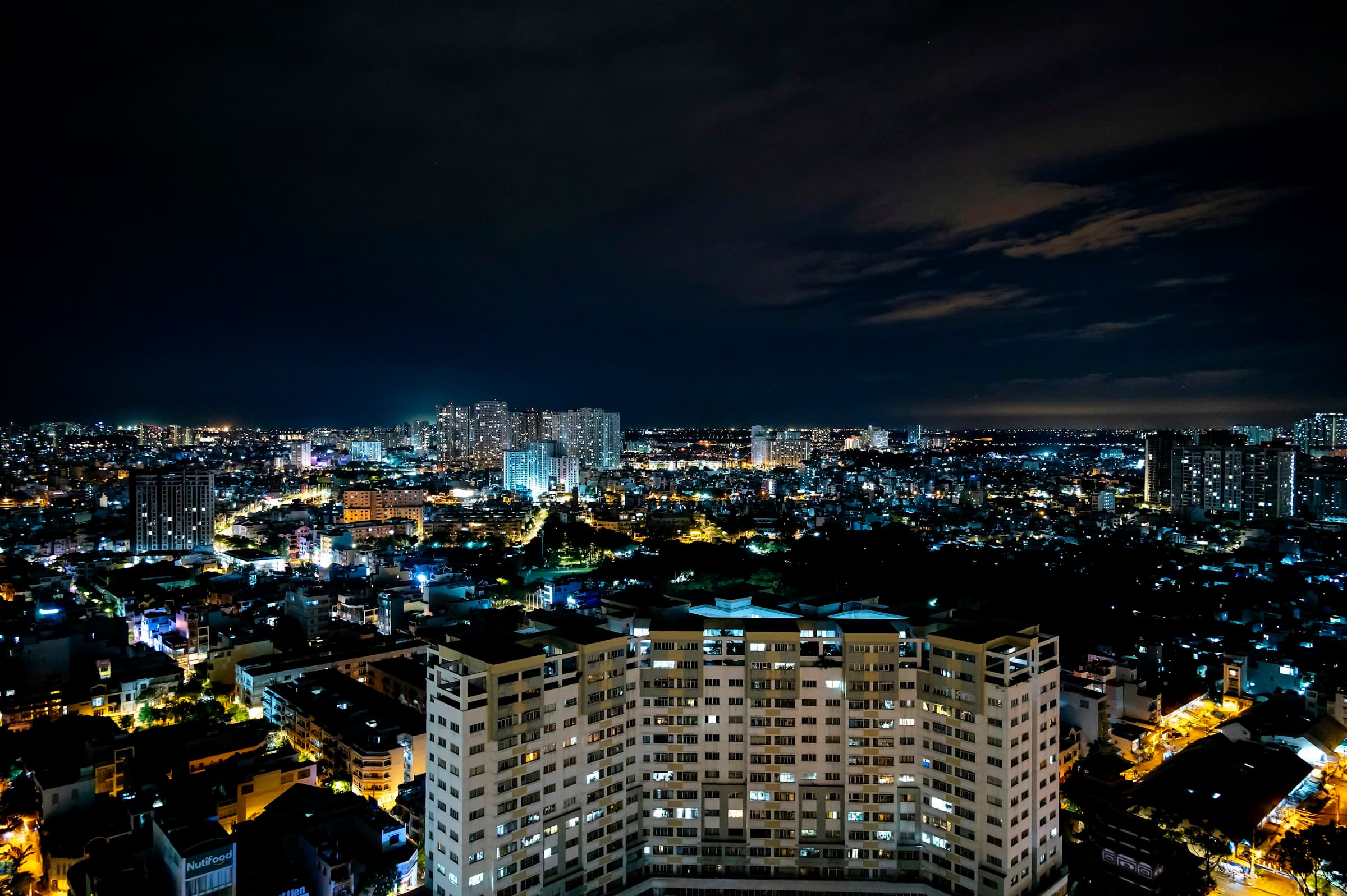
Sân bay
Ho Chi Minh City's aviation gateway — fast, large, densely worked, and carrying the restless movement of the most energetic city in Vietnam.
Photo: Etienne Girardet / Unsplash
| Airport codes | SGN / VVTS |
| Serves | Ho Chi Minh City and the south |
| Terminals | T1 • T2 • T3 |
| Character | Fast • Energetic • Connected |
The southern gateway of modern Vietnam. The first contact with the rhythm of Saigon. A symbol of high-intensity operations in southern aviation.
Tan Son Nhat is not simply an airport. It is where the rhythm of aviation meets the growth of Ho Chi Minh City — a large, densely worked gateway that connects the people, the commerce and the tourism of the south with the rest of Vietnam and the world.
A gateway tied directly to a restless megacity.
The very picture of an airport working at a high tempo.
A pivotal hub in the aviation network of the south.
T1, T2 and T3 make up the airport's present passenger structure.
A new domestic terminal, adding considerable capacity to the system.
A clear measure of the scale and intensity of the southern gateway.
Dense and varied connections across the airport's operating ecosystem.
The traditional domestic terminal of a busy airport. Airlines served: Vietjet Air, for domestic departures and arrivals.
Role: the core of domestic operations for many years.
The experience: quick, familiar, and full of Saigon's everyday movement.
What it means: bound up with the strong growth of domestic aviation in Vietnam.
The international space, where Ho Chi Minh City meets the world by air. The terminal handles international departures and arrivals.
Role: handles international departures and arrivals.
The picture: the international contact point of a major economic centre.
Its character: open, connected, and bound to the city's capacity to engage with the world.
The new domestic terminal, and the next step in Tan Son Nhat's expansion. Airlines served: Vietnam Airlines, Bamboo Airways, Sun PhuQuoc Airways and Vietravel Airlines, for domestic departures and arrivals.
Capacity: around 20 million passengers a year.
Function: adds capacity and relieves pressure on the existing system.
The message: a new layer of infrastructure for Vietnam's largest airport.
It begins with the earliest aviation history of Saigon, laying the ground for a strategic hub in the south.
The domestic and international structure took shape gradually, reflecting each phase of expansion and Tan Son Nhat's growing role for Ho Chi Minh City.
T3 entered service, opening a new layer of capacity for domestic passengers and relieving the existing system.
Operations continue at a very high tempo, confirming its position as the largest and most energetic gateway in the south.
A large, fast gateway in constant motion — carrying both the operating logic of a central airport and the particular energy of Ho Chi Minh City.
The airport is SGN in IATA and VVTS in ICAO.
The airport currently has three main passenger terminals: T1, T2 and T3.
T3 is the new domestic terminal, built to add capacity and relieve the existing system.
Its role as the aviation gateway of the south, the high tempo of its operations, and how directly it is bound to the economic life of Ho Chi Minh City.
The TripWise.vn team handles flights, hotels, visas and everything alongside them.